
Yearly Growth Plan for Agarbatti Manufacturers – Step by Step Guide
In today’s fast-growing incense industry, agarbatti manufacture is not just a small business — it’s a promising opportunity that can grow year after year if you have the right plan. Many small producers start making incense sticks at home or in small workshops, but very few take the next step to become big manufacturers or even exporters.
This blog will give you a clear yearly growth plan for agarbatti manufacturers so you can turn your small unit into a profitable, sustainable business.
 Why Agarbatti Manufacture is a Good Business
Before we get into the plan, let’s quickly see why agarbatti manufacture is worth growing: Low investment needed to start High and steady demand in India and abroad Easy to produce and learn Opportunity for women and small entrepreneurs Can sell locally, wholesale, or export
However, most people stay stuck with just one pedal machine or small production because they don’t plan ahead. So here’s how you can grow step by step.
 Yearly Growth Plan for Agarbatti Manufacturers
Year 1: Start Small & Learn
Your first goal should be to understand the basics of agarbatti manufacture:
-
Buy a manual or pedal machine or start rolling by hand
-
Make 1000–2000 sticks daily
-
Learn about raw material mixing and drying
-
Find 2–3 good local shops to sell your incense sticks
 Focus on quality, simple packaging, and building trust.
Targets:
-
Daily production: 1–2 kg
-
Daily profit: ₹500–₹1000
-
Monthly income: ₹15,000–₹30,000
Year 2: Improve Production & Sales
Once you know how agarbatti manufacture works, increase your capacity:
-
Buy another machine or upgrade to semi-automatic
-
Try 1–2 new fragrances (sandalwood, mogra, rose)
-
Improve your packaging — printed pouches look better in shops!
-
Supply to more shops in your town or nearby villages
Targets:
-
Daily production: 2–4 kg
-
Daily profit: ₹1000–₹2000
-
Monthly income: ₹30,000–₹70,000
Year 3: Build Your Brand
Now it’s time to think of branding your agarbatti manufacture unit:
-
Register your brand name and logo
-
Make colorful boxes and combo packs
-
Start selling at local fairs, exhibitions, temples
-
List your incense sticks on Meesho, IndiaMART, or Amazon
Try to get repeat customers — temples and spiritual shops are great repeat buyers.
Targets:
-
Daily production: 4–6 kg
-
Daily profit: ₹2000–₹3000
-
Monthly income: ₹60,000–₹1,00,000
Year 4: Scale Wholesale & Exports
When your brand is known locally, it’s time to scale your agarbatti manufacture business:
-
Buy a semi-auto or fully automatic machine for big orders
-
Hire 1–2 helpers for rolling and packing
-
Start selling bulk to wholesalers and pooja item dealers
-
Get your Import Export Code (IEC) if you want to export
Attend trade fairs or connect with big buyers online.
Targets:
-
Daily production: 7–10 kg
-
Daily profit: ₹3000–₹5000
-
Monthly income: ₹1–2 lakh
Year 5: Become a Recognised Agarbatti Manufacture Brand
By Year 5, you should aim to be a known agarbatti manufacture brand:
-
Sell special incense sticks — herbal, organic, premium
-
Launch your own online store or work with bigger marketplaces
-
Partner with temples, yoga studios, meditation centers
-
Export to overseas Indian stores
Targets:
-
Daily production: 12–20 kg
-
Daily profit: ₹5000–₹10,000
-
Monthly income: ₹2–5 lakh
 Important Tips for Agarbatti Manufacturers
Always buy raw materials in bulk to save cost. Keep experimenting with new fragrances. Train local women or family members for extra help. Keep proper bills — register under Udyam (MSME) for subsidies. Use social media for promotion — reels and posts work well! Focus on repeat buyers — temples, wholesalers, big pooja shops.
 Mistakes to Avoid
-
Using poor quality powders or cheap perfume oils.
-
Not drying sticks properly — moisture ruins fragrance.
-
Ignoring packaging — good packing sells more.
-
Depending on only one shop or buyer.
-
Not keeping daily records — always track costs and profit.
 Final Thoughts
With a clear yearly growth plan, any small agarbatti manufacture unit can become a big, stable business in 4–5 years. It does not need crores of investment — only patience, quality work, and a little branding effort.
So if you’re ready to grow your agarbatti manufacture business, take small steps every year: Add new machines Try new fragrances Sell in more markets Build a trusted brand
Keep quality first, stay consistent — and your incense will spread not just fragrance, but also your name far and wide!
 Need Help?
Want help with:
-
Choosing machines?
-
Finding raw material suppliers?
-
Making a logo?
-
Listing on online marketplaces?
Just message us — we’ll guide you step by step.
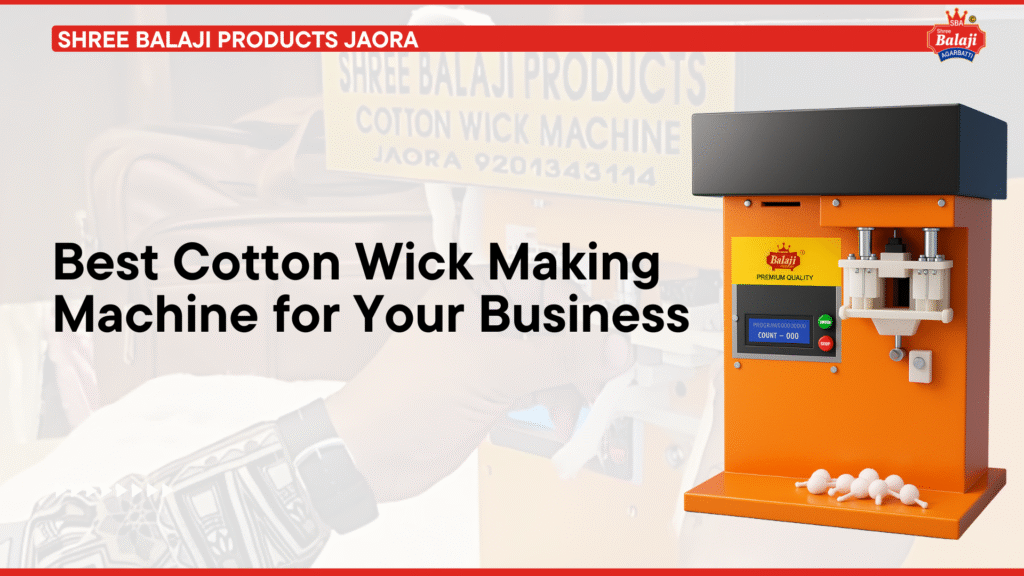
Starting a cotton wick business is one of the simplest and most profitable small-scale businesses in India today. But many new entrepreneurs get confused when it comes to choosing the best cotton wick making machine for their business.
Should you buy a manual machine, semi-automatic, or invest in a top high-speed model? How much should you spend? Which model will match your budget and production goals?
In this detailed guide, you’ll learn how to choose the right cotton wick making machine step by step — so you can invest wisely and grow your business with confidence.
Why Choosing the Right Machine is Important
The cotton wick (diya batti) business looks simple — but your machine choice decides: Your daily production capacity How much profit you earn daily How many people you need to run it The time needed to recover your investment
If you pick the wrong machine, you might produce less or spend too much on labor. So it’s better to compare machines properly before buying.
Types of Cotton Wick Making Machines
Let’s first understand the main types available in the market:
 Manual Cotton Wick Machine
-
- Low cost (₹5,000–₹12,000)
-
- Works without electricity
-
- Good for very small batches
-
- Fully hand-operated
-
- Suitable for training or hobby use
Best for: Beginners who want to try with very low investment.
 Semi-Automatic Cotton Wick Machine
-
- Mid-range price (₹25,000–₹45,000)
-
- Needs electricity
-
- One person can easily operate
-
- Makes 1–3 kg cotton wicks daily (8–10 hours shift)
-
- Fast, easy maintenance
Best for: Home businesses, small production units.
 Fully Automatic High-Speed Machine
-
- Price range (₹50,000–₹80,000+)
-
- High speed — makes 3–5 kg daily
-
- Best for bulk production
-
- One or two people can manage multiple machines
-
- Low wastage, neat finish
Best for: Small factories, wholesale supply, SHGs who want to scale.
How to Decide Which Machine is Best for You
Here are 7 important points to think about before you choose:
Know Your Daily Production Target
Ask yourself: How much cotton wick do I want to make daily?
-
- If you want to make 0.5–1 kg daily ➜ Manual is enough
-
- If you want 1.5–2.5 kg daily ➜ Semi-auto is best
-
- If you want 3–5 kg daily ➜ High-speed model is better
The more you produce, the more you earn. So think about your buyer base too.
Check Your Budget
Decide your budget honestly. A good semi-auto machine can easily pay for itself in 1–2 months. Don’t buy the cheapest if you plan to grow.
For example:
-
- Semi-auto for ₹27,500 ➜ makes you ₹300–₹500 profit daily
-
- High-speed for ₹55,000 ➜ makes you ₹600–₹800 daily
Think About Space & Electricity
-
- Manual machine: No power needed
-
- Semi-auto & high-speed: Need steady electricity & small workspace
-
- All machines are compact — a small room is enough.
 Who Will Operate It?
If you plan to run the machine yourself or with family, semi-auto is easy. One person can handle it easily.
For higher production, hire 1–2 helpers if needed.
 Compare Features & Warranty
Always check: Speed & daily output Power usage Ease of cleaning Warranty — good machines come with 1-year guarantee
 Talk to Your Seller
Buy from a trusted seller who explains the machine well, shows demo videos, gives spare parts and after-sale support.
 See What Others Are Buying
If you are not sure, see which models are popular:
At Chirag Products, most people choose:
-
- Semi-auto model for home or women SHG groups
-
- High-speed model for bulk supply or temple contracts
Top Selling Cotton Wick Machine Models
Here’s a quick look at some best-selling options
 Model 1: Semi-Automatic Cotton Wick Machine
-
- Price: ₹27,500
-
- Production: 1.5 kg/day
-
- Profit: ₹300/day average
-
- Good for: Home-based businesses, beginners
-
- Guarantee: 1 year
Model 2: Semi-Auto Heavy Duty
-
- Price: ₹42,500
-
- Production: 2.5 kg/day
-
- Profit: ₹500/day average
-
- Good for: Small shops, SHG groups, multiple buyers
-
- Guarantee: 1 year
Model 3: Top High-Speed Automatic
-
- Price: ₹55,000
-
- Production: 3–4 kg/day
-
- Profit: ₹600–₹800/day
-
- Good for: Bulk supply, wholesalers, temples
-
- Guarantee: 1 year
Why Buy From a Trusted Seller
Cotton wick machines are simple — but a good seller gives you:
-
- Proper training or video demo
-
- After-sale support
-
- Good raw material if needed
-
- Packing ideas
-
- Spare parts guarantee
Cheap machines without support cause trouble later.
How Fast Can You Earn Back Your Money?
Many people ask how soon they get their money back. Here’s an idea:
-
- Semi-auto: Earn ₹300 daily ➜ Get your cost back in 3 months or less
-
- High-speed: Earn ₹800 daily ➜ Get your cost back in 2 months or less
The more you produce and sell, the faster your profit.
Mistakes to Avoid
Buying very cheap unbranded machines Not checking daily output speed No guarantee or service No training or demo Not having raw material ready
Final Tips Before Buying
Talk to 2–3 machine sellers Ask for machine videos Take written warranty Always ask for spare part supply Buy cotton at wholesale rate to save more
Conclusion
So, if you are planning to start or expand your cotton wick business, choosing the right machine is your first step towards profit.
Start with what matches your budget, daily target, and local demand. A good machine makes your work easy, gives you neat wicks, saves time and earns you more.
If you want machine options, demo videos or price details, Chirag Products is always ready to help you choose the best cotton wick making machine for your business.
Need Help?
 Contact Us for:
-
- Raw material supply
-
- Packing ideas
-
- Tips to sell cotton wicks offline & online
Start small, choose the right machine, make good quality, and grow your profit day by day!